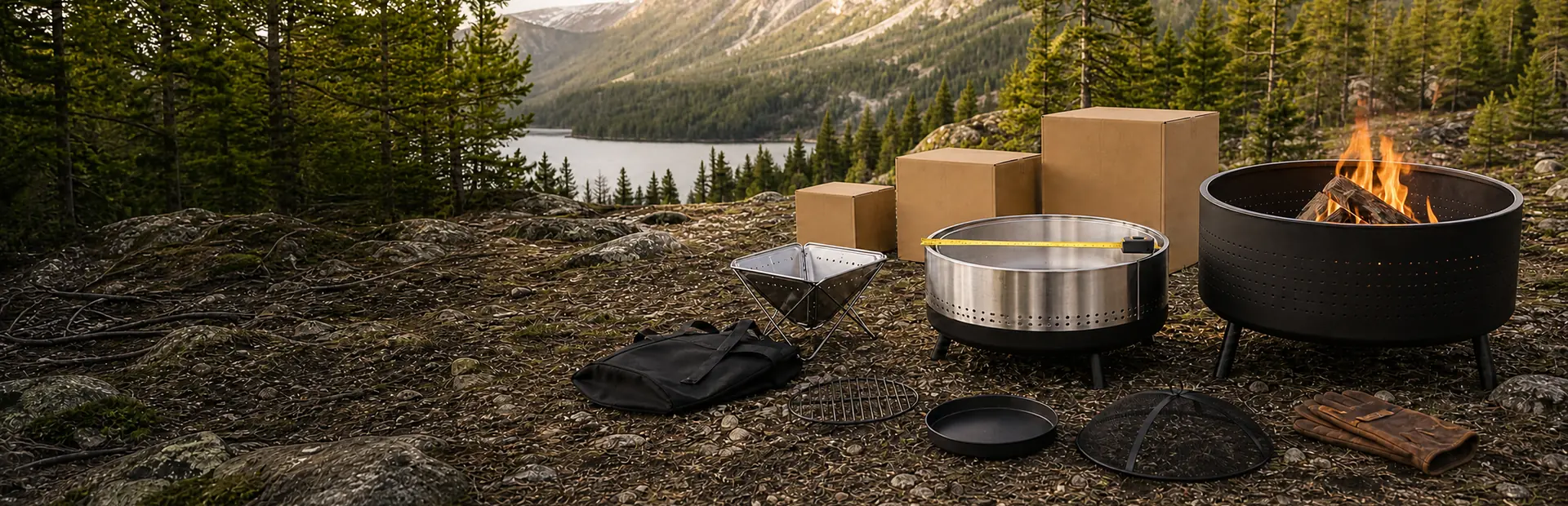
SIZE GUIDE
Select Size Around People, Place, and Packaging
Fire pit size affects more than flame diameter. It changes the user experience, cooking function, portability, carton size, shipping cost, and how the product fits into a retail or wholesale program.
for outdoor brands and distributors, the right size is the one that fits the target scene and still works commercially after packing, warehousing, and delivery are considered.
1. Start with User Count
Fire pit size should begin with the number of people normally sitting around it. A small fire pit can work well for solo camping or two-person trips, but it may feel undersized for family cooking or social backyard use.
For three to five users, a medium fire pit usually gives the best balance between flame view, heat presence, cooking space, and carton size.
For larger groups or patio-focused retail lines, a large fire pit can create a larger gathering point. Buyers should also plan for higher material cost, heavier packaging, and more shipping volume.
2. Match the Scene
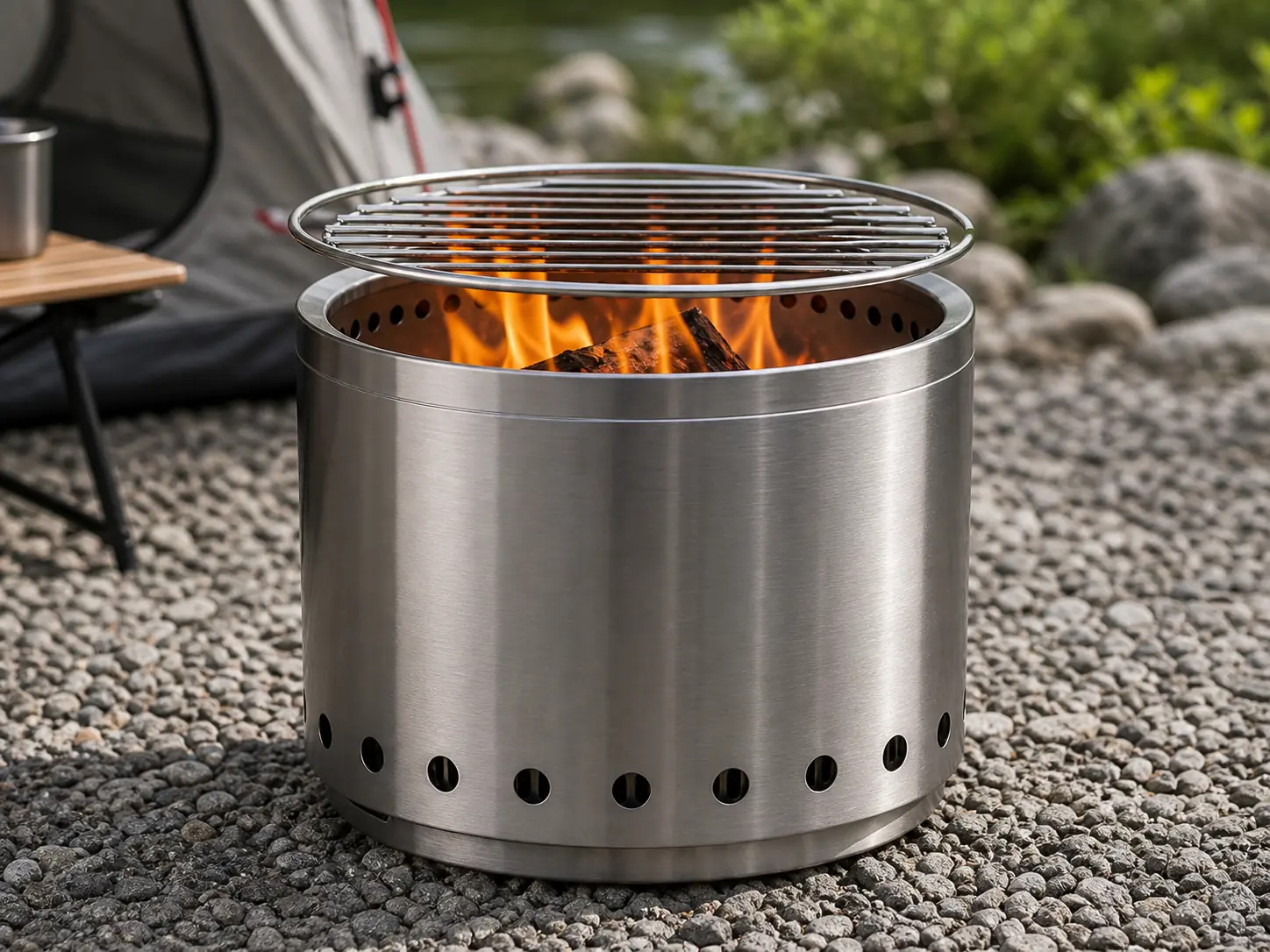
Camping fire pits and backyard fire pits are not selected in the same way. Camping customers care about carry weight, packed size, assembly speed, and whether the product fits inside a vehicle or storage bag.
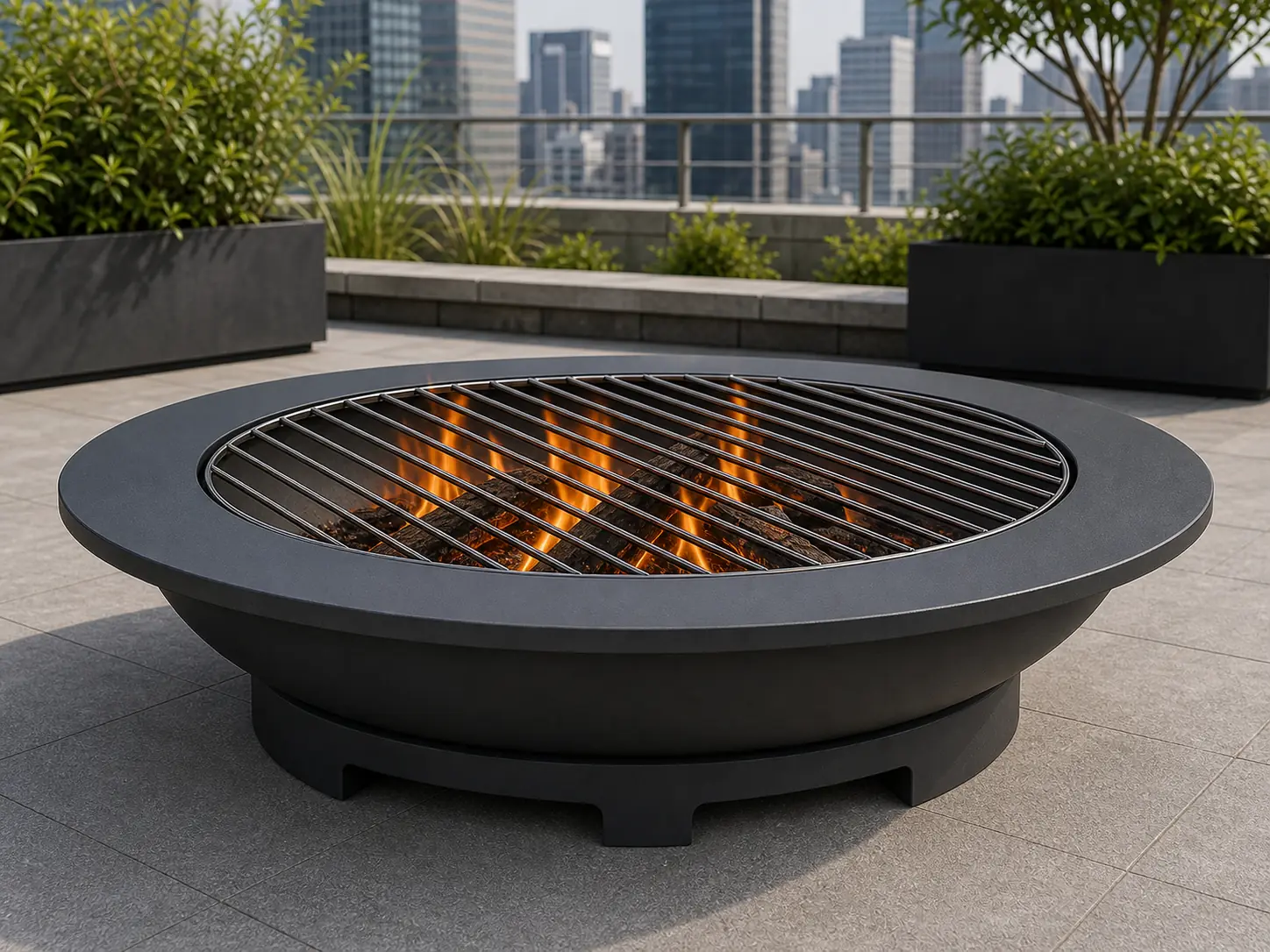
Backyard customers often care more about appearance, stable flame, cooking accessories, easy ash removal, and how the fire pit looks on a patio.
For distributors, the right product line often includes more than one size. A compact model can serve camping and entry-level buyers, while a larger model can target patio, BBQ, and higher-value outdoor living channels.
3. Use Diameter as a Starting Reference
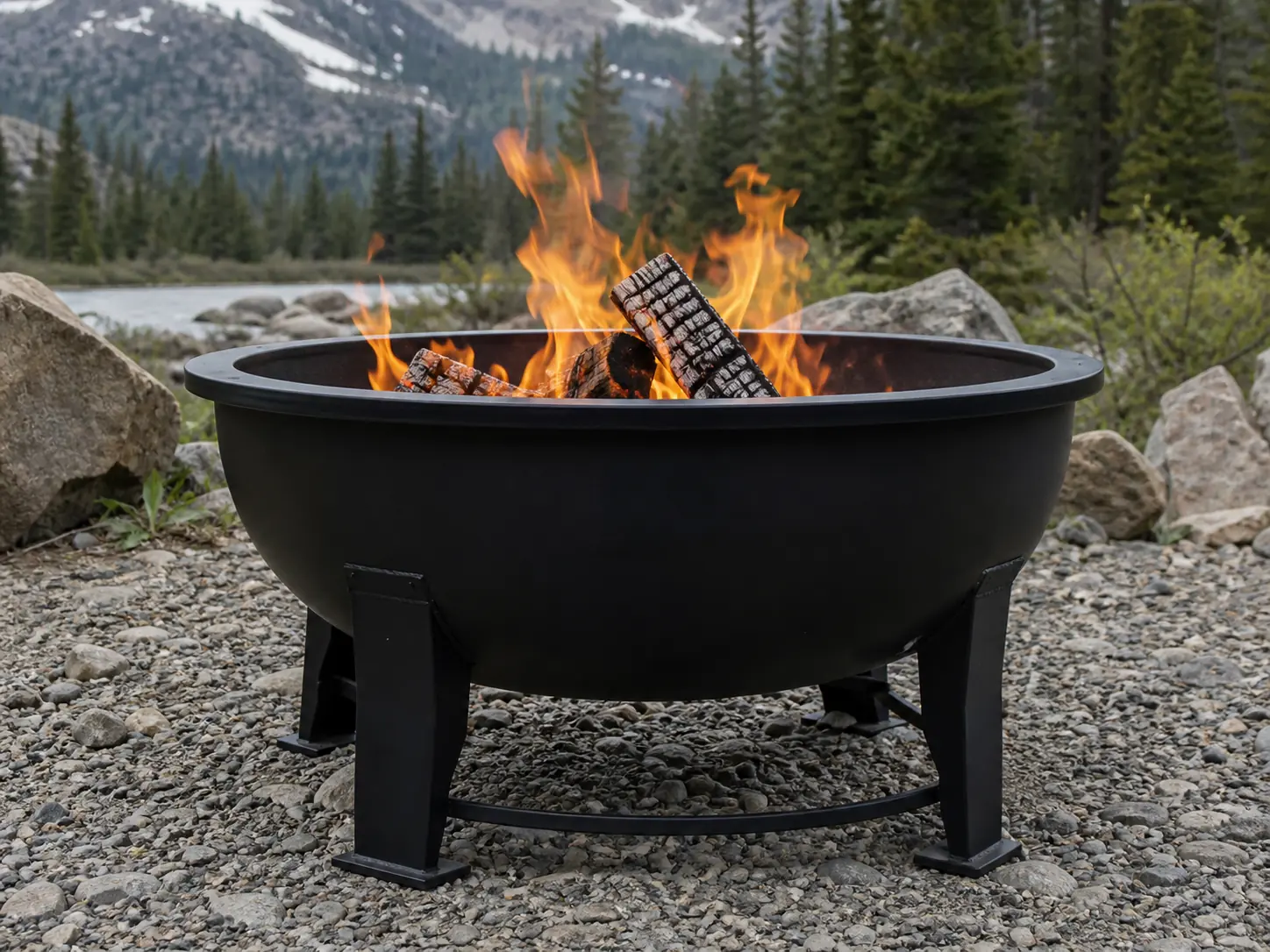
Diameter affects flame area, cooking surface, heat spread, and how many people can sit around the fire pit comfortably.
A smaller diameter is easier to pack and ship, but it limits fuel volume and cooking space. A larger diameter improves social use and visual impact, but it increases carton size and storage needs.
For B2B selection, diameter should be reviewed together with height, leg structure, wall thickness, nesting options, and packed carton dimensions.
4. Check Portability and Storage
Portable fire pits need a stable packed shape, manageable weight, and a carry bag or carton that protects the finish during transport.
Foldable legs, removable rings, nested parts, and flat-pack accessories can help reduce storage volume. However, every removable part also adds inspection points and user assembly steps.
For wholesale orders, confirm whether the product will sell as a camping item, patio item, or hybrid outdoor cooking kit. That decision affects packaging, manual content, and accessory planning.
5. Decide on Cooking Accessories
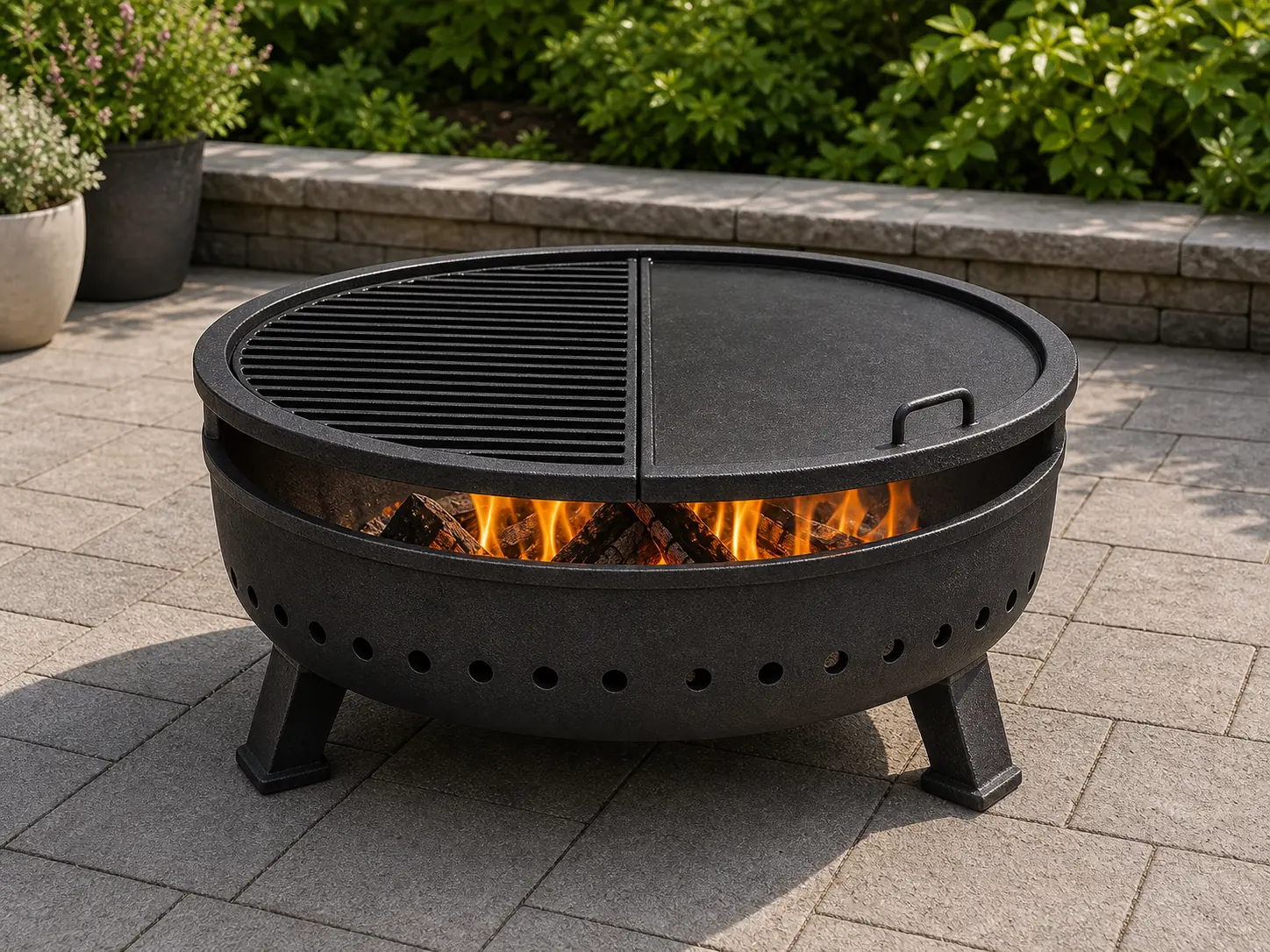
Many fire pit buyers expect more than flame. Grill plates, cooking rings, pot supports, ash pans, spark screens, and carry bags can turn a simple fire pit into a higher-value kit.
If the fire pit is positioned for BBQ or outdoor cooking, the top diameter and accessory fit become critical. Cooking plates should sit securely, remove easily, and match the fuel and airflow design.
Accessory planning should happen before mass production because it affects tooling, carton layout, replacement parts, and retail price.
- Grill plate
- Cooking ring
- Pot support
- Spark screen
- Ash pan
- Carry bag
- Heat-resistant gloves
- Replacement parts
6. Review Material and Wall Thickness
Material and wall thickness influence durability, heat resistance, weight, and price. Stainless steel is useful for corrosion resistance, while coated carbon steel can offer strong structure and competitive cost.
A heavy-duty fire pit may feel more substantial, but the buyer should check whether the target customer can move and store it easily.
For outdoor retail programs, sample review should include heat deformation, coating behavior, edge finish, leg stability, and ash removal after repeated use.
7. Calculate Packaging Volume
Fire pit size directly affects carton volume, pallet loading, shipping cost, warehouse storage, and retail shelf planning.
A model with strong visual impact may still be difficult to sell profitably if the carton is too large for the target channel. Before confirming a product, compare the assembled dimensions with packed dimensions.
For OEM and private-label projects, carton protection, manual placement, accessory compartments, and drop-test expectations should be confirmed early.
8. Build a Balanced Size Line
A fire pit range usually includes an entry size, a core size, and a larger high-value size. This gives buyers a clear ladder for different channels and price points.
The entry size should be easy to ship and explain. The core size should serve the broadest use case. The high-value size should justify its higher cost through larger size, accessories, materials, or cooking function.
- Entry camping size
- Core family size
- Large patio size
- Accessory kit option
- Carton size target
- Material and finish route
- MOQ and price ladder
- Private-label packaging plan
CONCLUSION
The Right Fire Pit Size Has to Sell and Ship Well
A good fire pit size should match the user count, outdoor scene, cooking function, portability target, and packaging plan. For B2B buyers, the final decision should balance product presence with carton volume, accessory value, and repeat-order potential.
Discuss a Fire Pit Program