OEM KNOWLEDGE
Private Label Is the Full Customer Experience
Private label manufacturing lets a buyer sell outdoor stove products under their own brand. Well-managed projects treat branding, packaging, manual, finish, and accessories as one complete offer.
The goal is not just to place a logo on a stove. The goal is to make the product feel consistent, reliable, and ready for the target retail or wholesale channel.
1. Understand What Private Label Includes
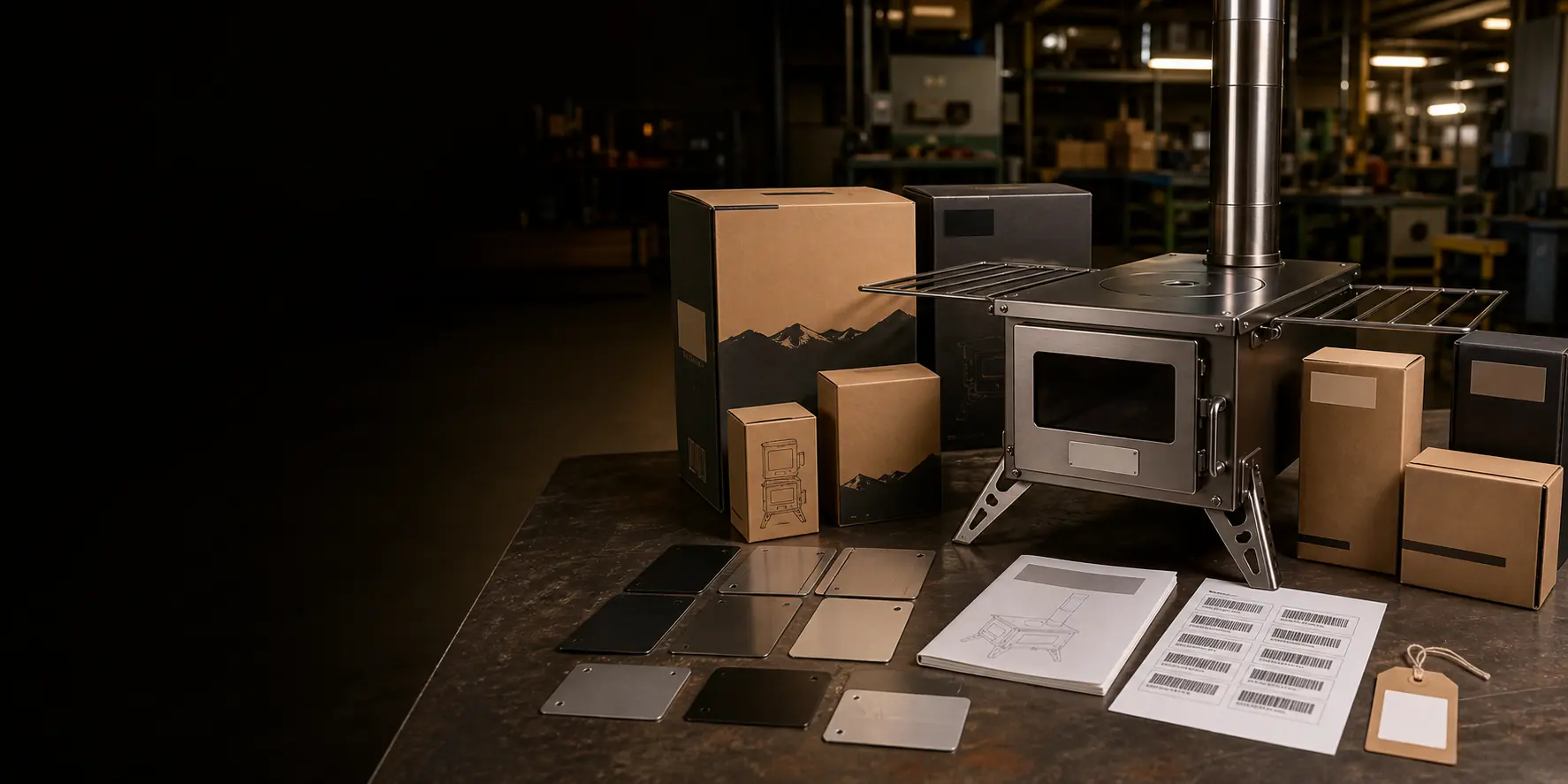
Private label manufacturing is not only logo placement. The final brand experience includes product finish, carton artwork, manual design, accessory set, inspection standard, and after-sales part planning.
For outdoor stoves, these details matter because the product is physical, heat-exposed, and often sold with accessories or replacement parts.
2. Choose the Logo Method
Logo application should match material, finish, budget, and brand position. Laser marking can look clean on metal parts, while silk screen, nameplates, hang tags, and carton printing support different retail needs.
Buyers should confirm logo position during sample approval because curved stove bodies, high-heat surfaces, and coated parts may limit placement options.
- Laser marking
- Silk screen
- Metal nameplate
- Hang tag
- Carton print
- Manual cover
- Sticker label
- Accessory bag mark
3. Plan Packaging Carefully
Packaging protects the product, supports retail presentation, and affects shipping cost. Outdoor stoves often need more protective packing because metal parts, glass windows, chimney sections, or coating surfaces can be damaged in transit.
Private-label packaging should include carton artwork, product manual, warning labels, barcode requirements, and accessory layout.
4. Confirm Finish and Color
Product finish can change perceived value and durability. Coated carbon steel, stainless steel, matte black, textured finish, or custom colors should be reviewed against target price and use conditions.
Finish decisions should be tested on samples because heat, scratches, moisture, and packing friction can reveal problems that are not visible in renderings.
5. Review MOQ and Cost Impact
Private label options can affect MOQ. Simple logo and carton changes are usually easier to support, while custom color, new accessories, special packaging, or structural changes can require higher minimum quantities.
Before confirming a route, buyers should separate must-have brand elements from optional upgrades. This makes the quote clearer and helps control first-order risk.
6. Approve Samples Before Production
A private-label sample should be reviewed as the final customer will receive it. Check product finish, logo position, carton print, manual, accessory list, packing protection, and overall unboxing experience.
Mass production should not begin until the approved sample, artwork files, packaging route, and inspection standard are aligned.
CONCLUSION
Confirm the Private-Label Specification Before Production
Buyers should approve the logo method, finish sample, packaging, order quantity, and product sample before production. Recording these decisions gives the supplier and buyer a consistent reference for inspection and future orders.
Plan Private Label