Technology Note
Manufacturing Quality Is Built Step by Step
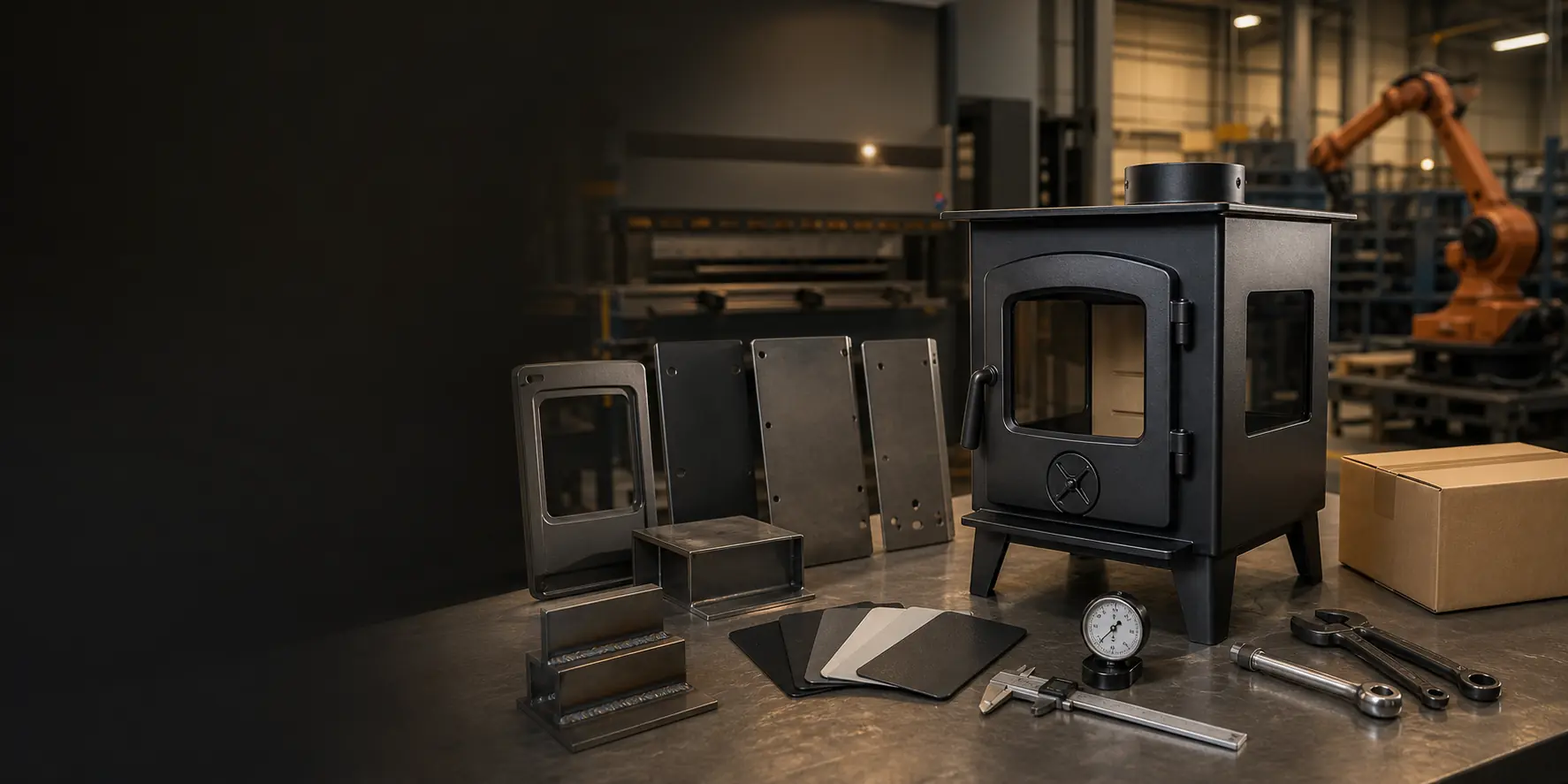
Outdoor stove quality is created across multiple production steps: material preparation, forming, welding, surface treatment, assembly, inspection, and packing.
For B2B buyers, understanding the manufacturing process helps turn product expectations into sample approval points and production inspection standards.
1. Forming and Welding
Forming accuracy affects assembly fit, airflow path, appearance, and accessory compatibility. Welding quality affects strength, heat durability, and customer perception.
Before mass production, the approved sample should define visible weld expectations, part alignment, hole position, and edge finish.
2. Coating and Assembly
Coating needs to match the product's heat exposure, storage environment, and brand positioning. Poor coating can create rust complaints, surface damage, or inconsistent appearance.
Assembly should be checked for door fit, leg stability, chimney connection, handle strength, glass protection, and accessory compatibility.
3. Inspection and Export Packing
Inspection should cover appearance, dimensions, assembly, accessories, labels, manuals, and carton protection. Export packing must protect metal surfaces, glass, chimney parts, and accessories during transport.
A clear inspection standard makes repeat orders more stable and reduces uncertainty before shipment.
- Part forming
- Weld quality
- Coating finish
- Assembly fit
- Accessory count
- Manuals
- Carton protection
- Shipping marks
NEXT STEP
Process Control Supports Repeat Orders
A clear manufacturing process helps buyers control quality from sample approval to export packing. Strong process details make private-label and wholesale programs easier to repeat.
Review Manufacturing Route